


My Aunt Bonnie made the best garlic dill pickles in the family, hands down, and everybody knew it. Her recipe has been a fixture in my family for decades, and it's the one I'm sharing with you today.
These are crisp, garlicky, packed with fresh dill, and brined in cider vinegar that gives them a little more depth than the plain white vinegar most pickle recipes call for. Plus, you get to choose your method - can them for the pantry, or skip processing and refrigerate for extra crunch.
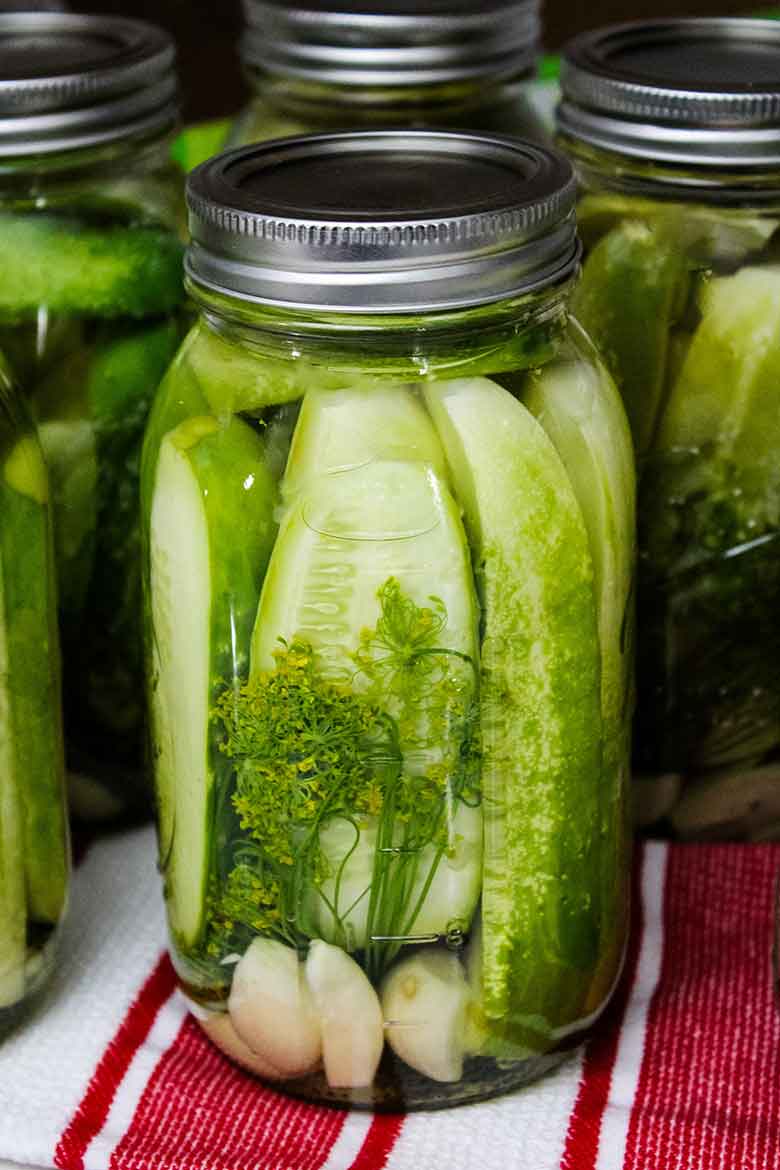
Aunt Bonnie's Pickles, My Dad's Recipe
Aunt Bonnie was my dad's sister, and pickling was just something she did every summer without fail - cucumbers from the garden, jars lined up on the counter, the whole kitchen smelling like dill and garlic. When she passed away I was still a teenager, but her recipe didn't pass with her. My dad held onto it, passed it on to our family members along with my mom's family, and to this day, it's the one we still make.
Why This Recipe Earns its Place in the Pantry
- Cider vinegar gives these a little more depth and tang than the plain white vinegar most recipes use.
- Made the way my family has made it for decades, with a real story behind it.
- Pick your method: can for the pantry, or refrigerate for extra crunch.
- The pickled garlic cloves are just as good as the pickles themselves - don't skip them.
Ingredients
Pickling Cucumbers: Look for small kirby cucumbers specifically. Their thinner, less waxy skin and lower water content compared to regular slicing cucumbers means they hold their crunch through the hot brine instead of going soft.
Cider vinegar: This does double duty: it's a preserving agent, but it also brings a softer, slightly fruity tang that plain white vinegar doesn't have. It's a big part of what makes these taste like Aunt Bonnies's pickles and not just any dill pickle recipe.
Canning salt: (also called pickling salt): Made specifically for pickling, with no additives. Table salt contains anti-caking agents that can cloud your brine and discolor your garlic and pickles, so it's worth seeking out the real thing.
Fresh garlic cloves: Whole, not minced. They not only add flavor but they mellow and pickle right alongside the cucumbers.
Fresh dill heads: Whole dill heads (the flowering part of the plant) give you the most authentic flavor. If you can't find them fresh, dill seed is a fine substitute - more on that below.

How These Come Together
Start with the cucumbers. Soak them in ice cold water for 3-4 hours before you do anything else - It's an easy step to want to skip, but it firms them up before they ever touch hot brine, and that's a big part of why these come out crisp instead of soft. While they soak, fill a large pan with water, bring it to a boil, an sterilize your canning jars and lids. You want everything hot and ready to go at the same time, since these pickles come together fast once you start.
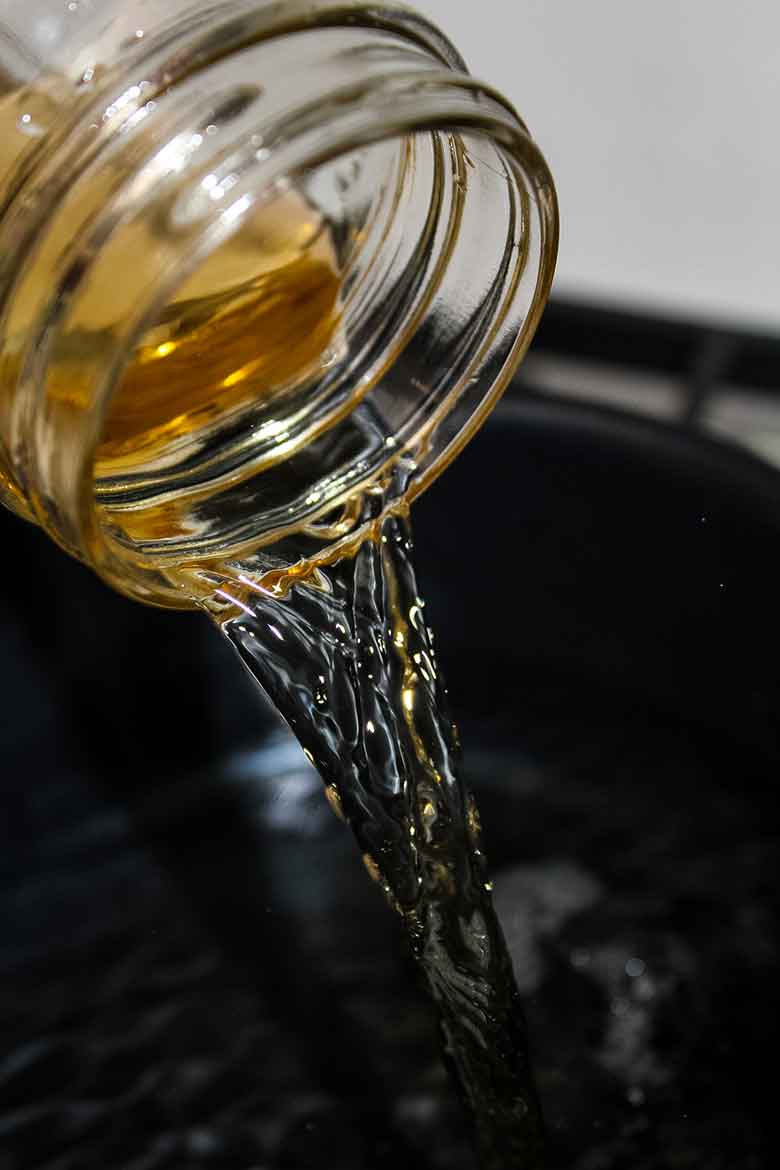
Next, make the brine: water, apple cider vinegar, and canning salt, brought to a full boil, then held at a low simmer so it stays hot while you work. This is a hot pack method, meaning the bring goes into the jars hot rather than being poured cold and processed longer - it's part of what makes this suck a quick recipe compared to some other canning methods.
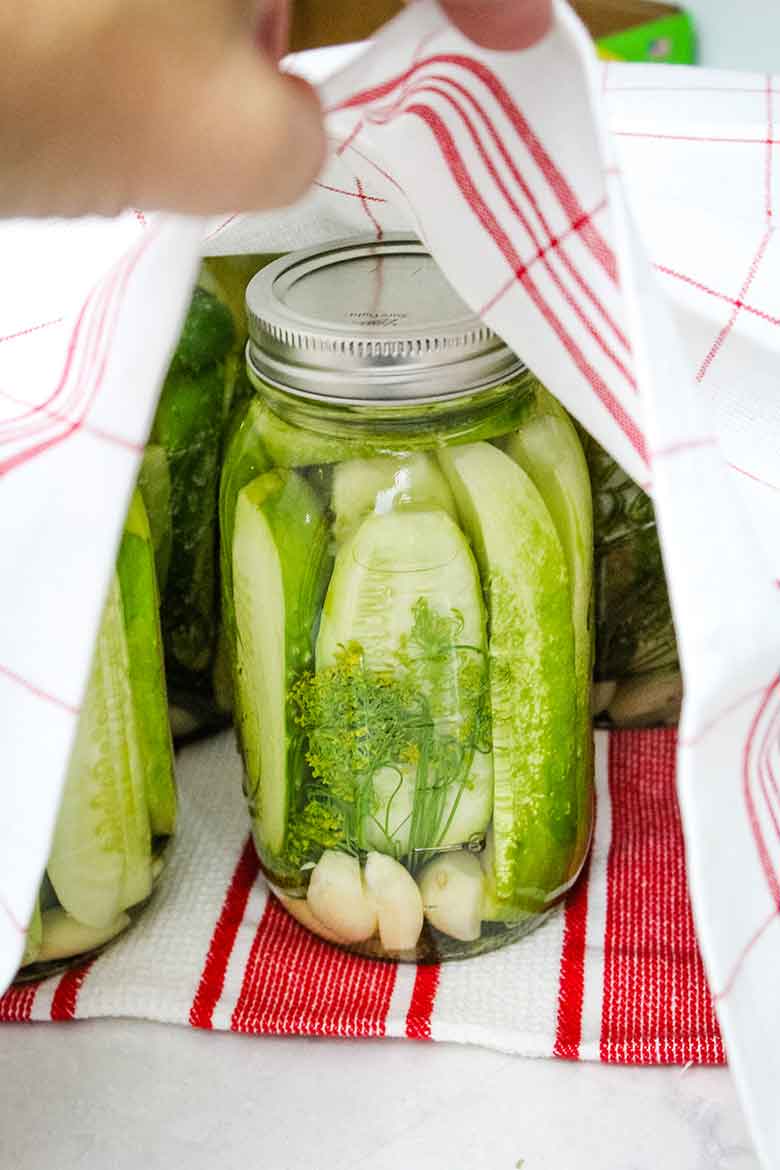
Pull one jar at a time straight from the sterilizing pot with tongs, set it on a towel lined counter, and build it from the bottom up: garlic and dill first, then cucumbers packed in tightly. Tight packing matters here - the more snugly the cucumbers fit, the less they'll float once the brine goes in, and the better your finished jar will look. Pour the hot brine over top, slide a thin rubber spatula down the side to chase out any trapped air bubbles, then wipe the rim clean before sealing with a lid and screw ban. Repeat jar by jar until you're out of cucumbers.

Equipment
Pantry or Fridge: How to Store Your Pickles
Canned and pantry-stored: Keep sealed jars in a cool, dark spot - a pantry or basement shelf works well. Properly sealed and stored, these will keep for up to a year.
Refrigerated: Plan to eat these within 1-2 months for the best flavor and texture.
How to tell if a jar has gone bad: Cloudy brine on its own isn't always a red flag - minerals in your water or the salt you used can cause harmless cloudiness. But if the brine is cloudy and fizzy, has visible mold, or smells off in any way, discard the jar. When in doubt, throw it out.
Variations
- No fresh dill on hand? Substitute 1-2 teaspoons of dill seed per jar in place of the fresh head. Fresh is still my first choice if you can get it, but dill seed will get you a very close result.
- Add ¼-1/2 teaspoon of red pepper flakes per jar for a spicy version.
- Want a milder garlic flavor? Smash the cloves lightly instead of leaving them whole - it mellows the bite without losing the flavor.
Pickle-Making Notes from Years of Practice
- The current safe canning recommendation is a 15-minute hot water bath (for altitudes up to 1,000 feet) if you're storing jars on the shelf rather than in the fridge.
- Regular-mouth or wide-mouth jars both work fine here. I prefer small mouth vs wide mouth, but wie mouth make packing a little easier if you're newer to canning. The only real difference is the jar opening diameter.
- Pack the cucumbers in as tightly as you can without crushing them. Loosely packed jars mean more brine and fewer pickles per batch.

Frequently Asked Questions
Yes, you can use white vinegar in place of cider vinegar. It'll still preserve the cucumbers just as effectively. ust know you'll lose a bit of the depth and mellow tang that cider vinegar brings, which is part of what makes this recipe taste like Aunt Bonnie's pickles specifically. If you want that flavor, stick with cider vinegar; if you just want a reliably crisp garlicky pickle, white vinegar works fine.
You can, but I don't recommend it. I've noticed the pickles and garlic cloves turn slightly discolored when I've used table salt instead of canning salt, likely from the anti-caking additives. Pickling salt is inexpensive and worth seeking out for the best-looking results.
Not automatically a problem. Cloudiness can come from minerals in your water or trace additives in you salt, and that's harmless. But if the brine is cloudy and fizzy, smells off, or you see any mold, discard the jar rather than risk it.
Water bath processed and properly sealed, they'll keep in the pantry for up to a year. If you skip the processing and keep them in the fridge, plan on 1-2. months for the best quality.

Related Recipes
If you love these Garlic Dill Pickles, you may want to try these Bread and Butter Pickles, Cucumber Kimchi, Nanny's 7 Day Sweet Pickles, and Homemade Canning Salsa
Serve with...
These pickles are perfect on a relish tray, piled onto sandwiches and subs, or just eaten straight out of the jar (no judgement here).
The last word
Canning pickles has always been a family tradition for us, and making a batch of Aunt Bonnie's recipe is one of those things that connects me back to my ad and to her, even now. This recipe makes about 7 quarts, it's genuinely easy whether you process it or refrigerate it, and it's still my favorite pickle recipe, hands down.

📖 Recipe
Aunt Bonnie's Garlic Dill Pickles
As an Amazon Associate I earn from qualifying purchases.
Ingredients
- 14 pounds pickling cucumbers
- 2 quarts water
- 2 cups cider vinegar
- ½ cup canning or kosher salt
- 4 garlic cloves per jar
- 1 Large head of fresh dill per jar
Instructions
- Soak the cucumbers in ice cold water 3-4 hours.
- Fill a large pan with water and bring it to a boil. Add the canning jars and lids to sterilize.
- In a large saucepan, bring the water, apple cider vinegar, and salt to a full boil. Reduce the heat to low to keep it hot.
- Remove one hot jar from the pan with tongs and place on towel lined counter top.
- Place the garlic and dill in the hot jar and pack with prepared cucumbers until tightly packed.
- Pour the hot brine solution over cucumbers. Slide a thin rubber spatula into the pickle jar to release any air bubbles. Using clean towel blot any liquid that may be on the lip of the pickle jar.
- Place the sterilized sealing lid on the jar and seal with screw cap. Repeat the process with the remaining jars.
- Place the hot pickle jars on a towel. When done, cover the pickles with another towel to prevent air circulating around them until completely cool.
- Be sure all lids have sealed. Any jars that did not seal will need to be refrigerated.
Chris Jensen says
Is it crucial to pour the brine to the very top of the jar in order to seal them?
Shelby Law Ruttan says
You should leave 1/2 inch headspace, do not fill to the very top of the jar. Thanks for asking!
Andrea says
Have you cut the cucs in slices? How does it change the processing time? Thanks for your answer and for your recipes.
Shelby Law Ruttan says
Hi Andrea, I have not cut the cukes in slices however I'm sure you can do so. Since this is a hot pack method, there is no processing time other than the time sitting on the shelf. You could test a jar after a week to see if it is pickled to your liking and if not, just cover and place in the fridge until the pickles are "pickled" enough for you. I hope this helps! I may do this in slices myself this year (cut the long way for sandwiches!) and if I do, I'll update the post with my results. However it won't hurt to try it yourself because it's pretty much no fail because you just refrigerate after opening. Let me know how it goes if you do this! Shelby
Julie says
This recipe is somewhat like I have made in past years. But they were called Mrs.Mills Oven Dills. I do everything that you have in your recipe, but after I fill jars with pickles with sanitized lids & jars, I put them in the oven at 250 for about an hour. Then take out & set on counter & wait for the seal to pop each jar. If they don't seal, which is rare, I put I fridge..Delicious!!
Monique Smith says
I have 2 questions. #1 Should the jars be turned upside down, after pouring the hot liquid and placing the lids?
#2 I used to can many years ago, learned from my mom. I started recently canning again, my recollection, I canned many other things using this hot pack method, do you can other things, as well? If so, what other things do you can using this method?
I guess that was 3 questions
Shelby Law Ruttan says
Hi Monique, thank you for your questions! I have never turned the jars upside down. I know some people do this, but have never found it necessary. I have canned other items using the hot pack method, however, they aren't on this website, they are on my other website, honeybunchhunts dot com. I have a hot pack salsa recipe and dilly beans. I also have some hot water bath canning. Feel free to email me if you have other questions. Thanks! Shelby
Carrie says
At what stage of the dill do you use? I’ll always confused by that
Shelby Law Ruttan says
Hi Carrie, I usually use the head of the dill after it has flowered. If you look closely at the jar of pickles in my photos you will see little yellow flowers you can still use the heads of dill up to a few weeks after it has flowered although it will begin to go to seed after it flowers. If you are growing dill, it will come back in the next year if it goes to seed.
Karen says
I tried these pickles and loved the flavor. I followed the recipe and my jars all sealed, so I put them downstairs with the other canned goods. BUT then weeks later I checked them and some of them were unsealed. I put those in the fridge and checked the remaining jars frequently. Eventually all came unsealed. What happened??? What did I do wrong? Recently I attended a local seminar on canning and their advice from the “expert” was that the pickles always had to be processed in a boiling water canner for at least 10 minutes. Wow, am I confused. Your take?
Thanks.
Shelby Law Ruttan says
Hi Karen, Unfortunately I cannot tell you what happened with the canning process for you since I was not there, but I can give you questions and ideas that could have caused this to happen. This is a method my family has used since I can remember and the same method I have used (and I am 60 years old!). As times change, recommendations have changed and out of safety concerns I recommend a hot water bath as recommended by the cooperative extension. Cucumbers are low acid and you are adding a high acid, boiling hot solution. Personally I do not do the hot water bath, but I recommend doing so if you are concerned about safety and are new to canning. I cannot say why your jars that did seal became unsealed. My only thought about a sealed jar not staying sealed without being in your home with you to do the process with you would be was the vinegar solution boiling hot?, Is temperature of where the storage room is was too warm? They need to be in a cool dry spot. Or,perhaps the jar top still had a cloth fiber or food fiber still on it causing an air bubble that would release air from the jar causing it to unseal.
Cienna Degele says
How long do the pickles need to be in the brine before eating?
Shelby Law Ruttan says
I would wait at least 3 weeks. Sorry for the delayed response. I have been away from home with no computer access.
Amanda says
Super tasty crunchy pickles. This will be my go to recipe!
Linette Mae Lashly says
Love it thank you so much. Basic and easy.
Amy says
Hi can these be waterbathed? If so how long. Thanks
Shelby Law Ruttan says
Hi Amy, this recipe is high enough in acid it does not need to be put in a hot water bath. These are hot packed in hot sterilized jars and lids. The jars will seal as they cool down with no need to process in a canner.
jonesy says
Is the brine really 2 quarts of water to 2 cups of vinegar? Other recipes I've used have been 1-1 ratio.
Shelby Law Ruttan says
Yes, the brine ratio is correct for this recipe. Thanks for checking!
Ella says
Can I use white vinegar instead of cider?
Shelby Law Ruttan says
Hi Ella, Yes, you can use white vinegar instead of cider vinegar. The only real difference between the two is the flavor. Both vinegars provide that tartness that is looked for in pickling. Cider vinegar lends a little sweeter flavor (although not enough to make this a sweet pickle) and will make the pickles a little darker in color. It's pretty much a matter of preference here.
Graham says
My first time canning & my 2nd batch of these. Easy to do & they taste so good!
Shelby Law Ruttan says
Hi Graham, thank you so much for coming back to rate this recipe! I'm happy you enjoy them 🙂 Shelby
Pat l says
I know it must be a typo, it says makes 47 quarts. I would like to make no more than 4.
Shelby Law Ruttan says
Hi Pat, you are correct. When I changed recipe cards out it was supposed to say 4-6 quarts and it converted. I have corrected this. The amount of brine will depend on how tightly you pack the jars. Leftover brine can be stored until you are ready to make another batch (if there is any). Good luck!
Michele says
so if it seals then they are shelf stable till the jar is open?
Shelby Law Ruttan says
Yes, they are shelf stable as long as they have sealed and the jar has not been opened.
Nancy says
Hi Shelby,
Im making this now and I'm afraid I may not have had my brine to a boil. I forget. If it doesn't seal, how long can they be in the fridge for before going bad?
Shelby Law Ruttan says
Hi Nancy, I would say no longer than 3 months to be on the safe side. If the jar is unopened it could last longer. Vinegar and salt are preservatives, so personally, if the pickle is crisp, the liquid is clear, it is probably good. And, always remember, when in doubt, toss it out.
Pam says
Question... hot jars and hot liquid is considered open kettle canning right? As long as they seal they are shelf stable and don't need to be refrigerated right?
Shelby Law Ruttan says
You still need to process in the canner and yes, they can be stored on the shelf and not refrigerated.
Irma says
How long should I wait before eating them? Mind have been sitting in the fridge for a week but I can't wait any more 😆
Shelby Law Ruttan says
Hi Irma, I usually wait two weeks. Since you are storing them in the fridge, it's ok to open them and try them to see if they are ready. If not, just let them set a little longer. Enjoy! ˜Shelby